Before the Printed Programme: A Short History of Concert Notes
Concert programme notes offer context without dictating a response. Learn how print, spoken introductions, and digital formats can help you prepare to listen.
Concert programme notes can orient you to a performance without telling you what you must hear. Their history is less a march toward one ideal format than a changing mix of practical information, interpretation, and ways to meet an audience’s needs.
At a concert, that guidance might arrive as a leaflet, a QR code, a brief spoken introduction, or not at all. Knowing what each format can offer makes it easier to use the available material without treating any alternative as deficient.
Concert programme notes began as event information
In some early concert settings, notices and printed programs named performers and works, helping attendees identify the event and its music. The details varied by place and occasion, so it is more accurate to describe this as one practical use of programs than as a universal starting point for concert notes.
As printed programs took on additional roles, some included translated song texts, background on a work, or information about a performer. These additions could connect the evening’s practical details with a listener’s curiosity, though no single format or level of explanation served every audience.
A program might assume prior musical knowledge, explain an unfamiliar term, or invite listeners to notice a recurring theme. A brief note could offer orientation, while a longer one gave readers more context to consider before the music began.
Printed notes offer interpretation as well as information
When a note discusses a work’s form, mood, or context, it proposes a way of hearing rather than merely adding facts. A writer might point to a recurring rhythm, describe how instrumental groups interact, or place the music in a broader artistic setting.
That interpretation can be useful, but it is not a rulebook. A vivid description may draw attention to one detail and away from another; a listener may hear the passage differently or find that the words do not fit the experience.
Think of a printed note as a map tucked into a coat pocket. It can point out a landmark, but the concert unfolds in real time, and you can set the map aside whenever you like.
Print, digital, and spoken notes suit different moments
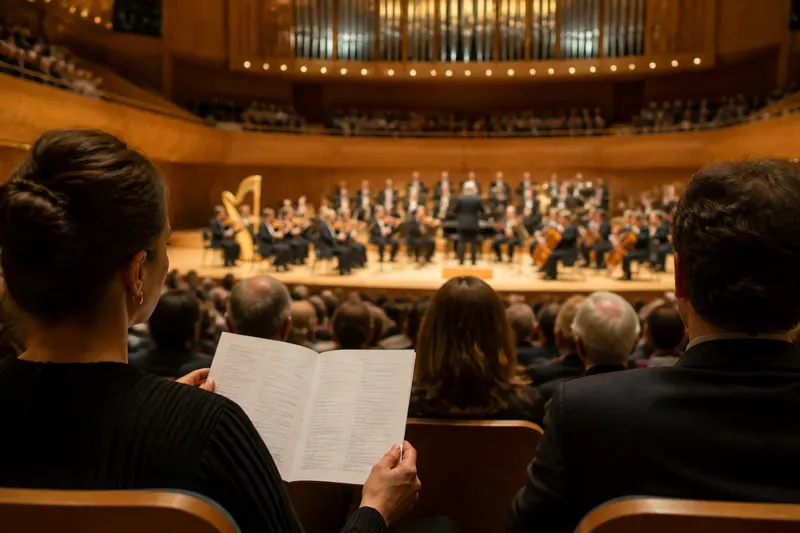
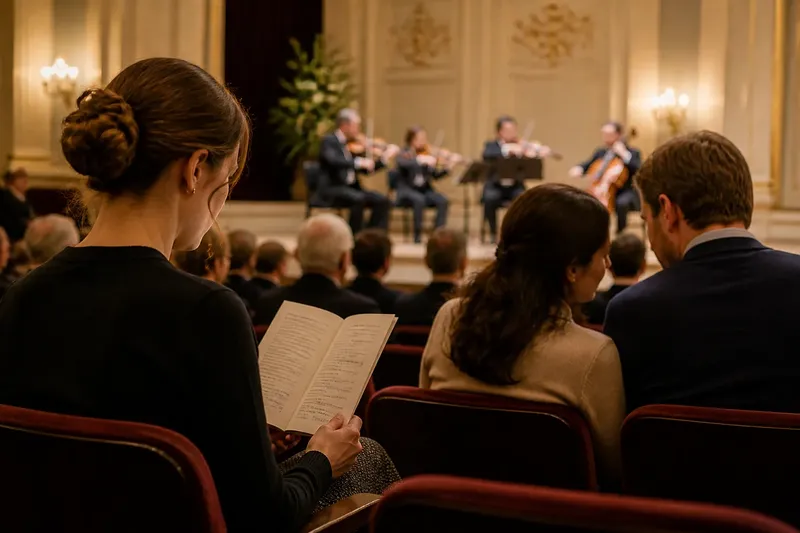
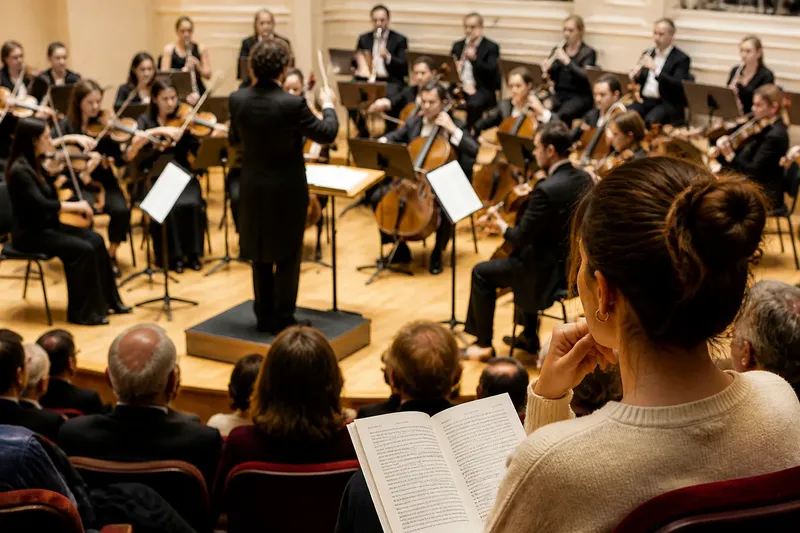
A booklet lets you scan the program before the music or revisit a passage during an interval. Its limits are physical: space is finite, type may be small, and dim light can make reading difficult. Some venues pair a concise handout with fuller material online.
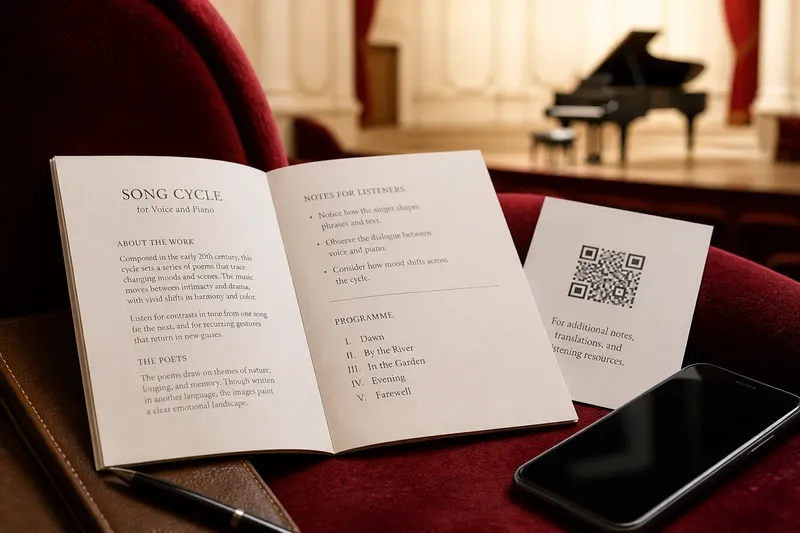
Digital notes can include links, audio, images, or more background. They also require a device, which may distract you or be unwelcome during a performance. A QR code is an access route, not an obligation; you can open it beforehand, use it at an interval, or leave it untouched.
A spoken introduction gives a performer or presenter a chance to emphasize one feature in a human voice. It passes quickly, however, and cannot be reread unless the venue also supplies a text.
Some events provide little or no commentary. The titles and performers may be enough orientation, or the organizers may want the sound to lead. The absence of notes does not mean you have missed a required key; you can choose one musical detail to follow instead.
Choose concert programme notes that fit your attention
Use a small decision process to keep preparation helpful rather than burdensome. For each point, check the observation and choose the action that fits.
- Available material: Check whether the venue lists a booklet, web page, QR code, or spoken introduction. If one format is available and suits your reading habits, use it; otherwise, rely on the work title and performer names.
- Unfamiliar terms: Check whether a note uses words you do not recognize. If one term seems useful, look up or mark that term; otherwise, skip the technical detail and follow the sound.
- Reading conditions: Check whether the print is easy to read where you plan to use it. If dim light or small type makes it difficult, read beforehand or use an accessible digital version; otherwise, keep the booklet for an interval.
- Device distraction: Check whether opening a phone would divide your attention in the hall. If it would, open the notes before taking your seat or leave them unread; otherwise, use them before the music or at an interval.
- Listening question: Check whether the note raises a question you genuinely want to follow. If it does, carry that single question into the performance; otherwise, choose a contrast in texture or simply listen without a prompt.
- After the performance: Check whether a sentence clarifies something you noticed. If it does, revisit it or use it to form another question; otherwise, leave the note unfinished and keep the memory of what caught your ear.
Say you are attending a concert with a song cycle in a language you do not speak. You have the work title, a printed note describing the cycle, and a phone whose screen you would rather not use in the hall. You read the printed description before taking your seat, decide not to memorize each song’s plot, and choose to follow how the singer’s tone changes from one song to another. During the performance, those changes give you an audible point of attention; afterward, you can return to the text if you want more detail. The tradeoff is that you may miss some narrative specifics, but you avoid dividing your attention to consult a screen.
How should you use concert programme notes?
Should I read concert notes before or during the performance?
Read beforehand if you want context without dividing your attention in the hall. During a concert, consult a note only when the format makes it comfortable, such as at an interval or between works.
Do programme notes tell me what I am supposed to hear?
They can suggest features worth noticing, but they do not set a required response. Treat comments on form, mood, or background as prompts you may follow, question, or ignore.
What can I do if there are no printed notes?
Use the information available, such as work titles and performer names, or listen without extra preparation. You might follow a contrast in texture, a recurring sound, or the way performers communicate.
Are digital notes as useful as printed notes?
Either format can provide context; the better choice depends on how you prefer to read and what the venue offers. Print is easy to keep at hand, while digital material may include links or additional resources.
Let the notes prepare your ear without replacing it
A work list, a short introduction, a detailed essay, and a digital resource each offer a different route into the same music. The useful question is not which format is proper, but what kind of attention it helps you bring.
When you next encounter concert programme notes, let them answer a real question about the evening, then give the performance room to exceed the explanation. A note can prepare your ear, but the sound itself remains yours to hear.