Solo Seat or Shared Row: Choosing Your Concert Company
Choosing concert company starts with how you want to prepare, talk, and listen. Match a solo seat or shared row to the evening you want.

Choosing concert company changes the shape of an evening before the first note: it affects what you discuss beforehand, where your attention can wander, and what you share afterward. If you are deciding whether to attend a concert alone or with someone, start with the kind of listening you want—not with an assumption that one choice is more sociable or serious.
Choose the company that fits your attention
A solo concert gives you room to follow a sound, lose track of time, or change your mind about what interests you without explaining yourself. A shared row adds companionship and gives the evening a common point of reference, but it also introduces another person’s pace and expectations.
Neither arrangement requires a particular level of musical knowledge. You can attend alone while feeling curious or uncertain, and you can go with a friend without turning the concert into a running discussion. Think of the choice as selecting a window seat or a shared table: both can suit the occasion, but they make different kinds of attention easy.
Begin with one question: do you want the music to be the main event for you, or do you want the experience of hearing it with a particular person to be part of the event? Your answer may differ from one concert to the next.
Go alone when you want an unedited listening evening
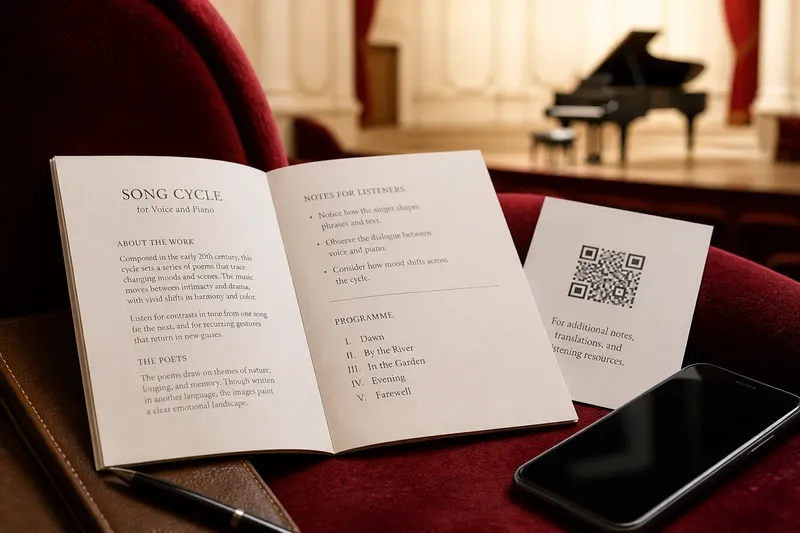
Solo attendance often suits a concert when you want to arrive with a private question and let the performance answer it in its own way. Perhaps you want to notice how a singer shapes a phrase, or simply let your attention move between the melody, the hall, and the quiet around the music. Without a companion, there is no need to synchronize your reactions or explain a choice of focus.
It can also be the easier option when your interest is specific but your prospective companion is lukewarm. You can choose a program for its unfamiliar instruments, an unusual pairing, or a composer you want to hear without asking someone else to share that enthusiasm. A solo ticket is not a consolation prize; it is a direct way to reserve the evening for your own curiosity.
Preparation can be lighter, too. You might read the program notes on the way, arrive with no plan beyond being attentive, or choose one feature to follow. The benefit is flexibility, not a requirement to listen with extra concentration.
Share the row when the relationship belongs in the evening
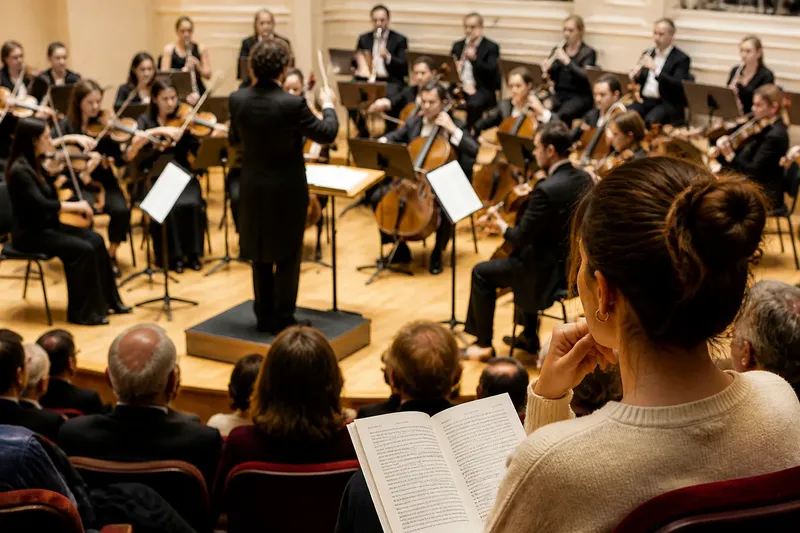
Going with someone fits when the pleasure includes being there together. A friend who enjoys the same performer, a relative you want to introduce to a concert hall, or a partner who values a shared outing may make the experience feel richer even if you listen differently.
Company can make preparation more inviting. You might compare what caught your eye in the program, decide whether to arrive early for a drink, or simply agree on where to meet. Those small arrangements create a sense of occasion without requiring a lesson or a detailed plan.
Choose a companion who can leave room for quiet once the performance begins. A concert hall is not a place for whispered commentary through the music, but the shared silence can itself be part of the companionship. If you expect to discuss every change of mood as it happens, consider saving that conversation for the interval or the walk home.
Choose by the situation you are actually in
Use the evening’s practical and personal details to make the decision. The same listener may choose differently depending on whether the concert is a familiar pleasure, a first visit for a friend, or an event they want to approach without distraction.
- You want to follow a private curiosity: Go alone if you would rather choose your own point of attention and let it shift freely.
- You want to make an occasion with someone: Share the row if the company is part of what you hope to remember.
- Your companion needs a gentler introduction: Go together if you can agree on an accessible pace, allow time for questions before the music, and keep expectations relaxed.
- You expect to disagree about the program: Consider separate seats or separate visits if choosing together would become the main event.
- You are unsure whether you will enjoy the concert: Go alone if you want to test your interest without managing someone else’s response; invite someone if their company would make the uncertainty easier.
Say you are curious about a chamber concert but a friend prefers larger orchestral sounds. You could attend this one alone, then invite that friend to a program that appeals to both of you; the likely result is a more relaxed evening for each, rather than one person trying to persuade the other to enjoy it.
Make shared preparation small and useful
When you attend with someone, preparation works best as an invitation rather than an assignment. Send the venue, start time, and program link, then ask what they are most curious about. This gives both people a chance to form an expectation without turning the outing into homework.
If you already know the music, resist the urge to explain every turn in advance. A short note—“I’m curious about the solo clarinet”—can offer a point of connection while leaving the performance room to surprise you both. If your companion is new to concerts, ask what would help them feel comfortable, such as knowing when applause usually happens or where to meet afterward.
For a solo visit, preparation can be equally simple: check the venue’s arrival details, glance at the program, and decide whether you want company during the interval. You can always chat with other attendees if the moment feels natural, but the evening does not depend on making conversation.
What should you decide before buying a ticket?
Should I go to a concert alone if I am new to classical music?
Yes, if you would be comfortable arriving and settling in on your own. You do not need specialist knowledge to listen, and a program note or a simple curiosity can give you a starting point without setting rules for what you should hear.
Is it rude to invite someone who knows less about the music?
No. Make the invitation about sharing the evening, not about whether they can identify instruments or understand the program. If they are unsure, explain the practical details and let them decide how much background they want.
What if my companion wants to talk during the performance?
Agree before the music begins that you will save conversation for the interval or afterward. If you expect different preferences and cannot settle them comfortably, separate seats may preserve both the outing and your attention.
Can we attend together but listen in different ways?
Of course. One person can follow the melody while the other notices the performers’ gestures or the hall’s acoustics; neither needs to report back during the music. Sharing a concert does not mean sharing an identical response.
Let the choice remain flexible
Choosing concert company is not a verdict on how much you enjoy people or music. It is a decision about what this particular evening needs from you: open-ended attention, companionship, or a little of both.
For a concert whose appeal is intensely personal, a solo seat can protect the freedom to listen your own way. For an evening you want to make with someone, a shared row gives you a common experience to carry out of the hall—even if your favorite moments differ. Choosing concert company well means giving the evening the kind of attention you actually want, and leaving room to choose differently next time.