The Familiar Composer Is Not a Listening Plan
A familiar composer is only a starting point. Choose one audible feature to follow and give a live performance a personal focus without needing theory.
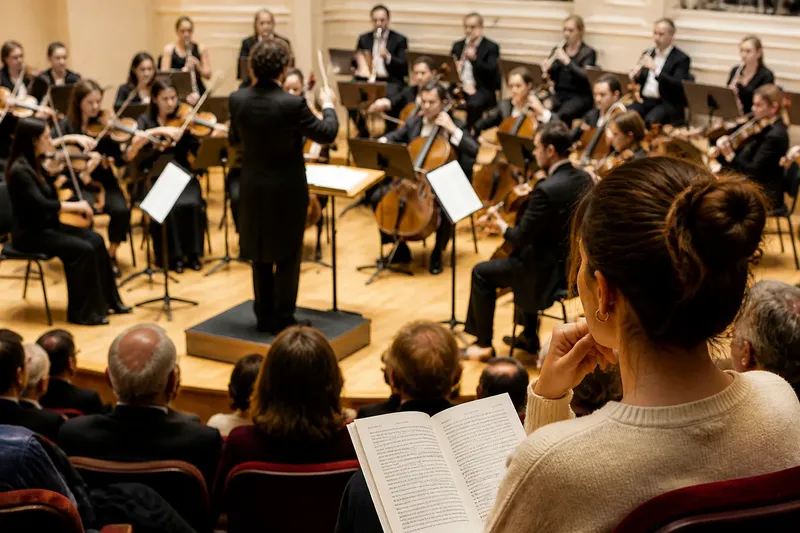
A familiar composer’s name does not tell you what will happen in the piece. For a live performance, choose one audible feature to notice—such as a recurring rhythm or a sudden pause—rather than treating a biography or reputation as a map.
This is not a test of musical knowledge. It is a way to give your attention an easy point of return while leaving room for the performance to surprise you.
A composer’s name gives context, not a listening plan
Works by the same composer can differ in mood, scale, instrumentation, and structure. A piece you have heard before can also feel different in a concert hall, played by another ensemble or heard from a different seat.
Biographical details and broad style labels may orient you, but they do not specify what to notice in the performance. A useful focus is something you can hear without specialist vocabulary and recognize if it changes or returns.
Think of it like following one road through a town you do not know: the town’s name gives context, but the road gives your attention a direction. In music, that direction might be a repeated rhythmic figure or a silence that makes the next entrance stand out.
Choose an audible feature that can change
A useful feature is distinct enough to recognize and flexible enough to follow without predicting the piece’s structure. “Listen for beauty” is too broad; “notice when a short rhythm returns” gives you something concrete to hear.
Possible focuses include:
- A recurring rhythm: If you hear a short pattern return, notice whether it sounds similar or has changed; if no pattern stands out, switch to a pause or another clear event.
- A pause or held note: If a silence or sustained sound shapes the passage, notice what follows it; if it does not stand out, choose a repeated sound instead.
- A change in volume: If the music grows louder or softer, notice whether the shift is gradual or abrupt; if volume stays steady, attend to a clear entrance or pause.
- A shift in register: If a musical idea moves between high and low sounds, notice the contrast; if the ranges are hard to separate, choose an audible rhythm.
- A change in ensemble density: If many parts thin to a few exposed sounds, notice what becomes easier to hear; if the texture remains dense, focus on a distinct recurring event.
- A repeated sound color: If a distinctive instrument sound returns, notice what surrounds it; if you cannot identify it, follow the event by its rhythm or register instead.
Each item pairs an observation with a decision, so you can adapt rather than strain to track something that is hard to hear. Like a bookmark, one focus helps you find your place again; it does not require you to read every line at once.
Use the programme to choose a manageable focus
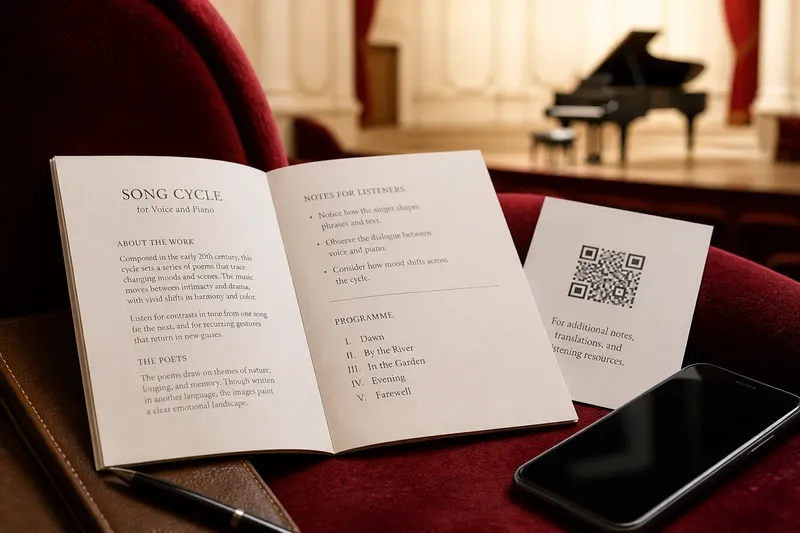
Read the instrumentation and any brief description before the performance. If the listing names unusual percussion, you might listen for a distinctive sound color; if it identifies a solo instrument, you might listen for when that instrument enters or pauses.
Programme notes can suggest possibilities, but they cannot tell you exactly when a sound will occur. If the notes are sparse, wait for the opening and choose the clearest audible event. There is no need to search the page during the music.
Say you see a listing for strings, woodwinds, and percussion, but the notes offer no listening cue. You decide to follow pauses. A quiet gap stands out before a new phrase, and later another pause separates two sections; the result is a simple sense of how moments of space shape the listening, without needing to identify the form.
Questions about choosing what to hear?
Should I read about the music before the concert?
A short programme note can tell you which instruments are present or point to a distinctive feature. Read enough to choose one possible focus, then let the performance determine what actually catches your ear.
What if I lose track of my chosen feature?
Let it go and return to it if it becomes audible again. The focus is a place to resume attention, not a demand to follow continuously.
Can I choose a focus without knowing music theory?
Yes. You can notice a rhythm returning, a pause, or a shift from a full sound to a sparse one without naming a technical device. Everyday descriptions are enough.
Should I focus on one sound or the whole ensemble?
Choose a distinct sound if it is easy to recognize. If no single part stands out, listen for a change that affects the ensemble as a whole, such as a pause or a shift in volume.
Keep the listening focus flexible
A listening plan is not a duty to account for every sound. You can follow one feature for a while and then respond to something else, such as an unexpected pause or a striking entrance.
Do not turn recognition into a scorecard. You do not need to identify every instrument or notice each return of an idea. If the focus helps you hear one relationship you might otherwise have missed, it has served its purpose.
For a live concert, the familiar-composer listening plan is most useful when it stays small: choose one feature you can describe plainly, and let the music decide whether it remains the right one. If it disappears, shifting to a clearer sound is a reasonable choice, not a failure.