How Concert Programme Order Shapes the Evening
Concert programme order can make a familiar piece feel different beside its neighbors. Learn how to read the sequence and hear the evening’s overall shape.
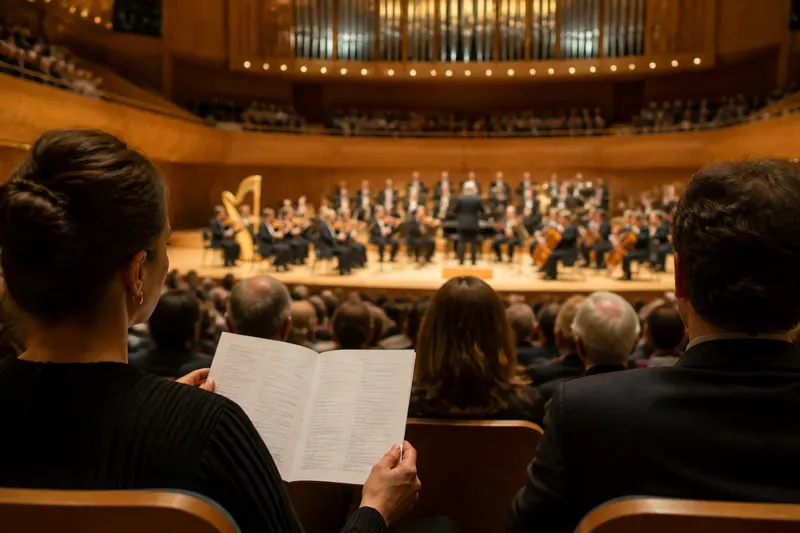
Concert programme order changes the experience of individual works: a solemn piece after a lively one can seem especially still, while a return to a familiar sound may feel newly charged. Reading the sequence before the performance helps you notice those relationships without needing to identify every style or musical technique.
Think of programme order like the arrangement of dishes at a table: what you encounter first can influence what comes next. The sequence may create contrast, continuity, or a pause in the evening’s emotional direction, whether or not the organizers intended a particular story.
Read the sequence for contrast and continuity
Start with the titles and order of the works, then check the listed performers and instrumentation. A solo voice followed by a full orchestra suggests a change in scale; two works for similar forces may instead invite comparison through mood, pace, or length as described in the notes.
Look for broad differences rather than trying to predict every sound. Programme notes can mention a premiere, a shared theme, or a historical connection, but the sequence remains worth hearing without that background. Treat these clues as context, not instructions for how you must respond.
Notice how one work changes the next
After each work, hold on to one simple impression: perhaps it felt intimate, ceremonial, restless, or playful. When the next piece begins, notice whether that impression seems to continue, reverse, or fade. This focuses attention on the relationship between works rather than asking you to track every instrument or musical line.
Imagine a program that begins with a brief, lively dance and follows it with a slow work for strings. The first step is to note the dance’s buoyant character; when the string piece starts, observe whether its pace feels especially settled by comparison. The result is a clear contrast to carry into the interval, not a claim about what either composer intended.
Use the interval to reset your expectations
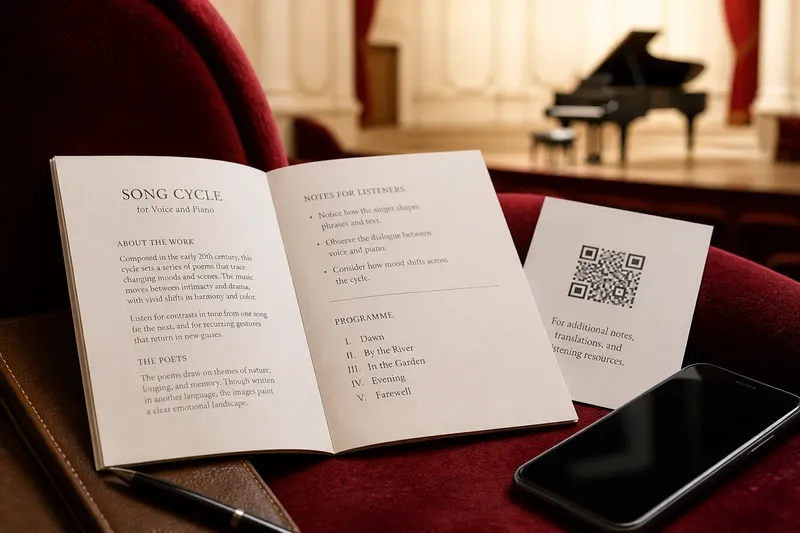
A pause between groups of works offers a natural moment to reconsider the sequence. If you have read the notes, use the interval to clarify a name or connection that interested you; otherwise, simply look at what comes next and let the previous piece recede.
There is no need to preserve a running account. A single impression works like a bookmark: it helps you return to the evening’s shape without taking up the space needed for the next work.
Compare the ending with the opening
Once the performance ends, recall how the opening and closing works differed. Did the program move from intimate to expansive, from lively to reflective, or toward a different combination of performers? A broad comparison can make the sequence easier to remember without turning it into a puzzle.
Keep intention separate from effect. You may feel that the final work answers the first, but that is a description of your experience unless the program notes explicitly identify a connection.
What can programme order tell you?
Should I read the programme notes before the concert?
Either choice is reasonable. Reading beforehand can explain unfamiliar titles or connections; waiting until the interval preserves an unprompted first impression.
What if I do not recognize any of the works?
You can still follow the sequence through broad impressions such as intimate or expansive, lively or reflective. The program’s listed order and performers offer useful context even when the titles are new to you.
Does the order reveal what the organizers intended?
Not by itself. The sequence can suggest a contrast or connection, but a claim about the organizers’ purpose needs supporting information, such as an explanation in the program notes.
What should I remember after the concert?
Choose one relationship that stayed with you: a contrast between the opening and finale, or a shift in mood from one work to the next. That concrete observation is enough to recall how the programme order shaped the evening.
Let one comparison carry the evening forward
Concert programme order is easiest to notice when you keep the task small. Read the sequence once, remember one impression after each work, and compare the opening with the ending; if the order feels connected, note how, and if it feels varied, let that variety be the observation.
That approach also leaves room for a useful question on the way out: which work would you choose to hear beside another one on the program, and what contrast or continuity would you want to notice? Your answer can guide what you look for in a future performance without requiring a theory of the concert’s design.